7 min read
Can AI Understand Fatigue and Adjust Intensity Like a Real Coach?
Not the way a coach does, no.
AI doesn't actually perceive fatigue. It infers it from things like training load, how an athlete rates their sessions, sessions they skipped, and how their performance changes over time.
And that inference is genuinely useful. A system can track patterns across hundreds of athletes without forgetting what happened three weeks ago.
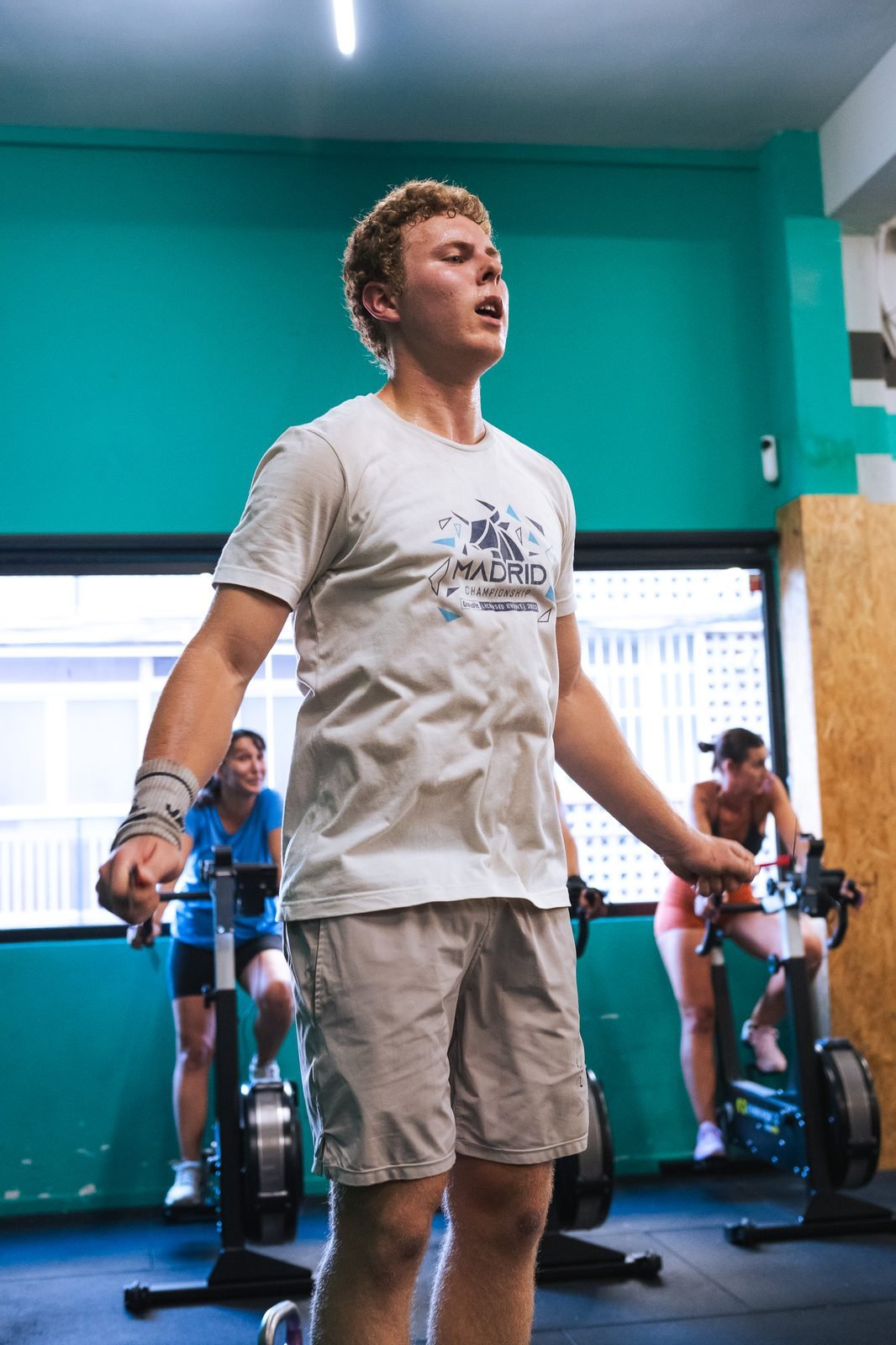
But it's also completely blind to something a coach can notice in a few seconds: the athlete who walks into class and just looks off.
I've coached CrossFit for a few years and have been building Vory One alongside it. I've sat on both sides of this question, and the honest answer is somewhere in the middle.
What fatigue actually is, before we talk about software
Fatigue isn't one thing. That's the first problem.
Sometimes it's muscular. Sometimes it's accumulated training fatigue from a hard block. And sometimes it has very little to do with training at all: a terrible week at work, two nights of bad sleep, a flight, a newborn, a stressful week at home.
A coach doesn't usually separate these things consciously. You just see the athlete.
You see how they walk in. How they warm up. Whether they're talking. Whether the bar moves the way it normally does.
Software doesn't see any of that.
So the real question isn't whether AI "understands" fatigue. It's how much of fatigue we can actually measure, and what happens to everything we can't.
What the signals actually are
Strip away the marketing and there are only a handful of useful signals.
- Recent training load. How much someone has been doing, at what intensity, over the last few days and weeks. This gives you the context that a single workout never can.
- Perceived effort. An athlete telling you a session felt like an 8 when the same kind of session felt like a 6 a few weeks ago is meaningful.
- Performance. If a weight that normally moves well suddenly feels heavy, or an athlete's usual pace starts dropping, that's another useful signal.
- Missed or shortened sessions. Sometimes fatigue shows up in the calendar before the athlete ever talks about it.
- Sleep and recovery data. Helpful when you have it. Not essential.
I had an athlete who almost never missed class. Then she started arriving late, skipping the occasional session, and one day told me a weight that normally felt comfortable suddenly felt heavy. None of those things seemed like a big deal on their own. A few weeks later, though, the pattern was obvious. She wasn't recovering from training the way she normally did. That's exactly the kind of slow change software can be good at spotting.
Where AI genuinely beats a coach
I want to give the software some credit here, because this part is real.
In a busy class, a coach is making hundreds of little decisions. You remember the athlete who's been struggling recently. You notice the person in front of you who looks tired. But you won't remember every session every athlete did six weeks ago.
A system will.
It can notice that someone's training load has gradually increased, their RPE has gone up with it, and their performance is starting to flatten out.
A coach might eventually notice that too. The difference is that software can keep watching the pattern every single day.
That's a real advantage.
Where it's blind, and this matters more
Now the part I think gets missed in a lot of AI conversations.
The system doesn't know someone came straight from a twelve-hour shift. It doesn't know they've barely slept because their baby was awake all night. It doesn't know they just had a horrible day.
And sometimes you can see that before they say a word.
I remember an athlete who looked completely normal on paper. But when she walked into class, she was different. Normally she was one of the loudest people in the room. That day she barely spoke. Her warm-up was slow, and even the way she set up under the bar looked hesitant.
I asked if she was okay. She said she was fine.
I asked again.
She eventually told me she'd barely slept for two nights.
We changed the session.
No training history or RPE score was going to show me what I saw in those first few minutes.
That's still the job of the coach.
So what's the actual answer?
I don't think it's AI versus coaches.
The machine is better at the long-term picture. The coach is better at today.
The machine doesn't forget. The coach knows what happened this morning.
A good system should do the boring part really well: track the history, spot the pattern, flag the change, and explain why it's recommending something different.
Then the coach gets to make the final call.
The problem is when a system pretends it can see everything.
It can't.
And any tool that tells you it completely understands an athlete's fatigue is probably overselling what it actually knows.
What this means if you're building or buying
There are a few things I'd look for in any system that claims to adapt training to fatigue.
- Does it actually use training history, or does it generate a workout from a static athlete profile?
- Can it explain why it changed something? "Intensity was reduced because recent load increased while reported effort also increased" is useful. A random number with no explanation isn't.
- Can the coach override it?
- And does it still work when there is no wearable data?
Because most of coaching still happens with a person standing in front of you, not with a perfect stream of biometric data.
I've had athletes tell me they're tired when I knew they still had plenty in the tank. I've also had athletes tell me they're fine when I knew they needed to back off.
That's why I don't think AI replaces a coach.
Programming the workout is only part of coaching.
Sometimes coaching is looking someone in the eye, watching their first few reps, and making a different decision from the one you would have made on paper.
That's the part I'd never want to automate.
FAQ
Can AI detect overtraining?
It can flag patterns that may be consistent with excessive fatigue, such as rising load, declining performance and increasing reported effort. It cannot diagnose overtraining, and it cannot see every source of stress outside training. Think of it as an early warning system, not a diagnosis.
Does it need a wearable to work?
No. Wearables can add useful information, but training history, perceived effort and performance are already valuable signals.
What can a human coach see that AI cannot?
Today. The face. The warm-up. The mood. The hesitation under the bar. The fact that someone is clearly not themselves. AI sees the trend. The coach sees the person.
Is AI-adjusted intensity safe?
Only if the system has strong guardrails. The model should never be allowed to override basic safety rules just because its prediction says otherwise.
Written and reviewed by
Adriana García Martín
Co-founder and COO of Vory One. CrossFit coach and Semifinals athlete.